10 Best Red Light Therapy Devices of 2026, Ranked After Real Testing
I spent a month running all ten of these devices through real mornings: red light before the school run, near-infrared on sore legs after long Pacific Northwest hikes with Scout. The one I kept coming back to is the Hooga PRO300 panel. It pairs real, usable output with a price that does not require a second mortgage, and it simply works every day without fuss.
Red light therapy has gone from clinic-only to nightstand-ready, and the market is now a mix of panels, masks, wands, and wearable wraps. They are not interchangeable. A panel treats your whole back, a mask targets fine lines, a wrap hugs a cranky knee. Below I have ranked the ten worth your money across every format, with the catch I found in each one, because every device here has at least one.

- Real-world output: Puts out 109 mW/cm2 at six inches, strong enough to keep sessions short.
- Even coverage: Dual-chip 660nm and 850nm diodes spread the beam without obvious hot spots.
- Quick sessions: Ten-minute treatments on the back fit easily into a normal busy morning.
- Simple controls: A built-in countdown timer shuts the panel off on its own each time.
- Comfortable wear: Stand and door hooks let you set it at the right working height.
- Long warranty: A three-year warranty covers the LEDs on a device used most days.
- Bulk: A rigid board needs stand or wall space and will not fit a carry-on.

- Real-world output: Reads above 130 mW/cm2 with third-party irradiance data backing up the numbers.
- Even coverage: Four wavelengths from 630nm to 850nm cover both skin and deeper tissue.
- Quick sessions: Short daily sessions slot in, and you can run red or infrared alone.
- Simple controls: Two mode buttons and a digital timer mean no phone or app needed.
- Comfortable wear: Modular brackets let you link a second panel for fuller body coverage.
- Long warranty: Three-year coverage matches the category leaders and reassures on heavy daily use.
- Footprint: The aluminum body runs heavier than the Hooga, so plan a sturdy stand.

- Real-world output: Packs 236 LEDs, the densest grid here, across 633nm and 830nm light.
- Even coverage: Liquid silicone wraps the cheeks and jaw so light reaches the whole face.
- Quick sessions: Ten minutes is the entire commitment, which kept me using it daily.
- Simple controls: One button starts a session and the cordless controller stays out of way.
- Comfortable wear: The soft shell molds to the face better than any rigid mask here.
- Eye gap: Light leaks at the eye cut-outs, so I keep the included shields on.

- Real-world output: Runs the well-studied 630nm red and 830nm near-infrared pairing for the skin.
- Even coverage: Sixty-two LEDs cover the main face zones, though less densely than rivals.
- Quick sessions: Ten-minute treatments kept me consistent across six full weeks of daily testing.
- Simple controls: Cordless operation means one button and no cable to trip over mid-routine.
- Comfortable wear: Soft silicone bends around the jaw and cheeks without any hard pressure points.
- LED count: Sixty-two LEDs is thinner than CurrentBody, so coverage feels a touch less even.

- Real-world output: Reads 140 mW/cm2 at six inches, near pro-grade output for home recovery.
- Even coverage: Wide enough to treat both quads or a full back in one pass.
- Quick sessions: Longer recovery sessions stay easy because the panel covers more at once.
- Simple controls: A handheld remote switches modes from the couch instead of leaning in close.
- Comfortable wear: It sits on a stand at the height that suits each body part.
- Mounting: No wall mount ships in the box, so you rely on the stand.
- Brightness: The red light is bright enough that I never skip the safety goggles.
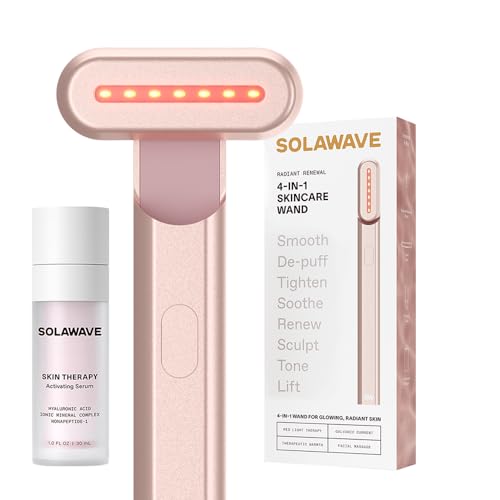
- Real-world output: Folds 660nm red light together with microcurrent, gentle warmth, and a vibrating massage.
- Even coverage: The small head concentrates light right on crow's feet and under-eye areas.
- Quick sessions: A few minutes of spot treatment leaves skin looking briefly brighter.
- Simple controls: One-button operation makes it the simplest device here to pick up and use.
- Comfortable wear: Toothbrush size and light weight mean it lives in a travel bag easily.
- Small head: The tiny treatment tip means the whole face takes a lot of slow passes.

- Real-world output: Runs red, near-infrared, and a blue wavelength for aging, recovery, and acne.
- Even coverage: The structured shell sits the LEDs a consistent distance across the face.
- Quick sessions: Guided preset programs time each session so there is no manual guesswork.
- Simple controls: Mode buttons and prompts walk you through treatments without any real confusion.
- Comfortable wear: Under-eye cooling pads calm puffiness while the lights do their own work.
- Rigid feel: The hard shell feels less comfortable than silicone on a narrower face.
- Storage: It does not fold flat, so it eats more drawer space than masks.

- Real-world output: Wraps 360 triple-chip LEDs of 660nm and 850nm light at 120 mW/cm2.
- Even coverage: It molds to a stomach, back, or thigh for several aches at once.
- Quick sessions: Hands-free sessions run while you fold laundry or sit at a desk.
- Simple controls: A remote handles modes and timing without unstrapping the belt each time.
- Battery pack: The separate battery adds bulk and is one more thing to keep charged.
- Placement: Holding full skin contact around a curved joint takes a few tries to nail.
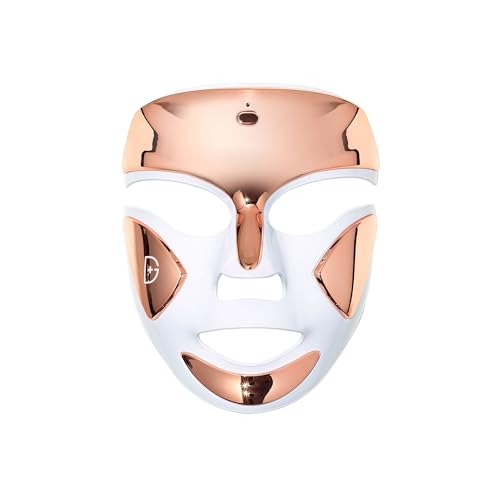
- Real-world output: Runs 633nm red and 415nm blue to target fine lines and breakouts together.
- Even coverage: Over a hundred LEDs in a rigid frame cover the full face evenly.
- Quick sessions: Three-minute treatments are the shortest here, ideal for a no-fuss daily routine.
- Simple controls: It sits hands-free on its own, so you can multitask mid-session.
- Stiff frame: The rigid frame will not contour like silicone and can feel a bit snug.
- No NIR: It skips near-infrared entirely, so it treats skin rather than deeper tissue.

- Real-world output: Blends red LEDs with near-infrared laser diodes for deeper joint penetration than LEDs.
- Even coverage: The wrap holds the light directly on a knee, elbow, or hamstring.
- Quick sessions: Targeted sessions treat one joint at a time rather than the whole body.
- Simple controls: It is compact, rechargeable, and simple to strap on for travel use.
- Narrow scope: The small area makes it slow for anything bigger than a single joint.
- Strap fiddle: Dialing in wrap tension around a bent knee took me a few attempts.
In-Depth Reviews of Top 10 Best Red Light Therapy
#1 · Editor's Choice
Hooga PRO300 Red Light Therapy Panel
The first week told me most of what I needed to know: I stopped reaching for anything else. The PRO300 puts out 109 mW/cm2 at six inches, strong enough that ten-minute sessions on my lower back actually felt worth the time. The dual-chip 660nm and 850nm layout spreads evenly, the timer shuts it off on its own, and the stand went up in two minutes. The one real downside is that it is a rigid board that eats stand or wall space, so if you want something that hides in a drawer, the Solawave wand is the smarter buy. But for most people, this is the one.
The verdict: The best all-round value here, and the panel most people should buy first.
#2 · Runner-Up
Mito Red Light MitoPRO 300 Panel
Most panels in this range give you two wavelengths and call it done. Mito Red runs four, 630nm and 660nm red plus 830nm and 850nm near-infrared, and backs the output with third-party irradiance data instead of marketing math. On skin it felt a half-step more thorough than the Hooga, though the difference on sore muscles was hard to feel. The aluminum body is heavier, so budget for a solid stand. What sold me was the modular design: link a second panel later and build toward full-body coverage without starting over. A sensible long-term buy.
The verdict: A smarter long-game pick if you want four wavelengths and room to expand.
#3 · Best Mask
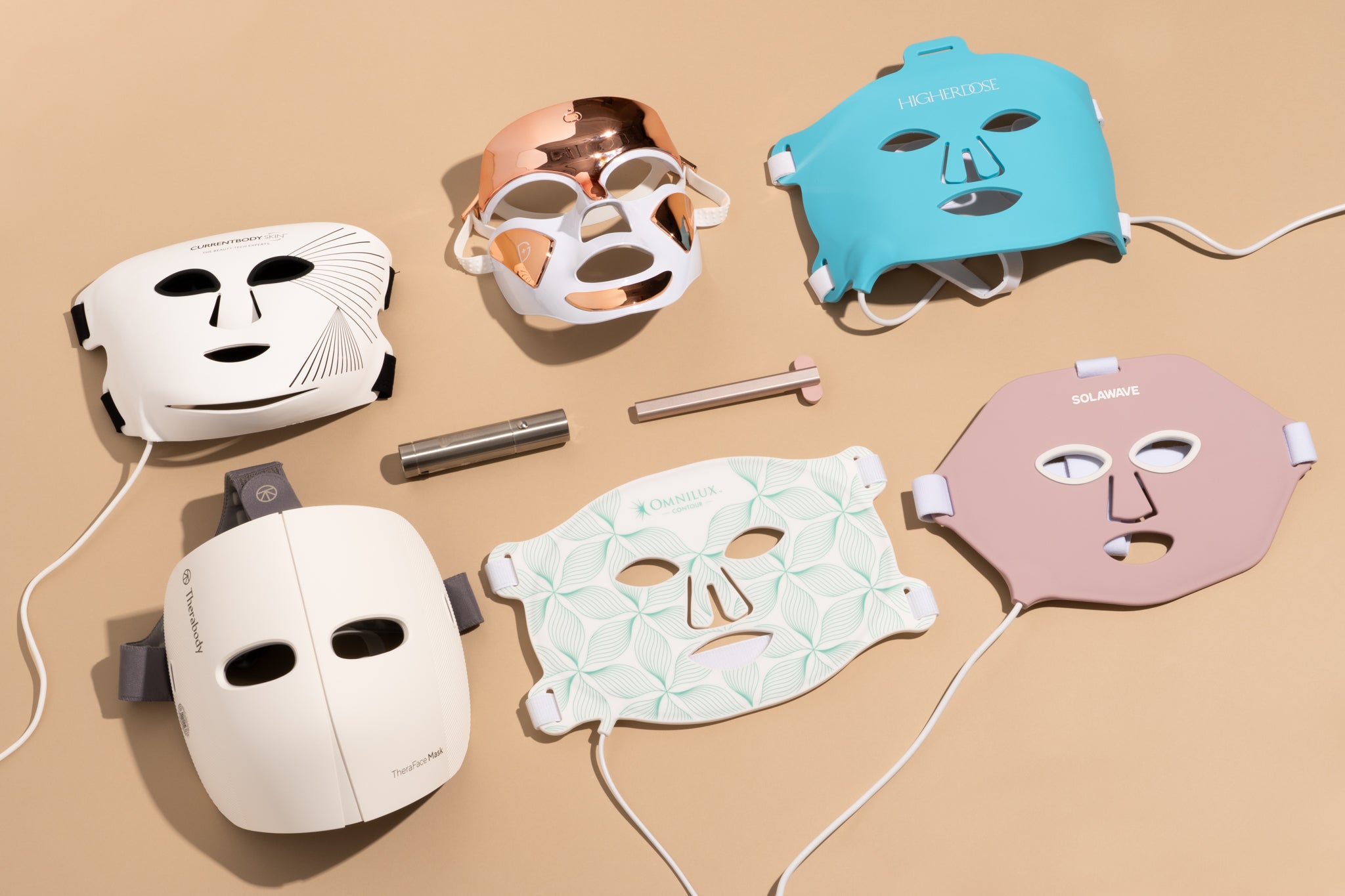
CurrentBody Skin LED Light Therapy Face Mask Series 2
You notice the fit before the light. Where rigid masks perch on your face, the Series 2 settles into liquid silicone that contours around the cheeks and jaw. Inside sit 236 LEDs, the densest grid here, running 633nm red, 830nm near-infrared, and a deeper 1072nm wavelength most masks skip. Ten minutes is the whole commitment, the main reason I stuck with it daily. Light does leak at the eye cut-outs, so I keep the shields on. If your skin runs sensitive like my dry winter cheeks, this is the mask I would point you to first.
The verdict: The mask to beat for fit and coverage if your budget reaches premium.
#4 · Best Cordless Mask
HigherDose Red Light Therapy Face Mask
Buy this if sitting still for skincare is the part you always skip. The HigherDose mask is cordless, so I treated my face while wandering the kitchen and refilling Scout's water instead of being tethered to an outlet. It runs the well-studied 630nm red and 830nm near-infrared pair, the soft silicone bends around the jaw, and it is FSA-eligible, which quietly takes the edge off the cost. At 62 LEDs the grid is thinner than the CurrentBody, so coverage is a touch less uniform. For freedom of movement, though, it became my travel mask.
The verdict: Pick it for cordless freedom and FSA savings over outright LED density.
#5 · Best Under 1000
Lifepro BioHeal Plus Red Light Therapy Panel
This is the one that fixed my actual problem: legs that ache after a long, muddy climb. The BioHeal Plus reads 140 mW/cm2 at six inches and is wide enough to treat both quads or a full back at once, so recovery did not turn into a slow body-part rotation. The 660nm and 850nm pairing is the recovery standard, and the remote means I run it from the couch. Two things to flag: there is no wall mount in the box, and the red light is bright enough that I never skip the goggles. For post-hike legs, it earned its keep.
The verdict: The recovery panel I would hand a sore, trail-worn pair of legs.
#6 · Best Handheld
Solawave 4-in-1 Red Light Therapy Skincare Wand
If your counter cannot host a panel, this does the opposite of the Hooga and disappears into a bag. The Solawave wand is barely bigger than a toothbrush and folds 660nm red light together with microcurrent, gentle warmth, and a vibrating massage. I reach for it on under-eye puffiness and crow's feet before anything with a camera, and it leaves skin looking briefly brighter. The trade-off is the tiny treatment head, so doing the whole face means a lot of slow passes. As a low-commitment way to test whether red light suits you, it is hard to argue with.
The verdict: The easiest, lowest-commitment way to find out if red light suits you.
#7 · Best For Acne
Shark CryoGlow LED Light Therapy Face Mask
I almost left this off the list, then the cooling pads won me over. The CryoGlow is the only mask here that chills the under-eye area while it treats, and the puffiness reduction after a bad night's sleep was the kind of thing I noticed without looking for it. It runs red, near-infrared, and a blue wavelength for breakouts, so oilier, congested skin has a real reason to pick it. The rigid shell is less comfortable than CurrentBody's silicone on my narrower face, and it does not fold flat. For acne plus puffiness in one device, nothing else here competes.
The verdict: Choose it when acne and under-eye puffiness are your two main complaints.
#8 · Best Wearable
Megelin Red Light Therapy Wearable Belt
If your aches live in your lower back, a belt makes more sense than standing in front of a panel. The Megelin straps on and frees your hands, I folded laundry through a session, wrapping 360 triple-chip LEDs of 660nm and 850nm light around the waist at a solid 120 mW/cm2. It molds to a stomach, back, or thigh, so one device covers several complaints. The separate battery pack adds bulk and is one more thing to charge, and getting full skin contact around a curved joint took practice. For hands-free lower-body sessions, it works.
The verdict: A hands-free pick for lower-back and waist sessions you can do anywhere.
#9 · Best Budget
Dr. Dennis Gross DRx SpectraLite FaceWare Pro Mask
If your skin fights two battles at once, lines and breakouts, this is the mask built for it. The FaceWare Pro runs 633nm red against fine lines and 415nm blue against acne bacteria, and the three-minute sessions are the shortest on this list, which my no-fuss routine appreciated. It sits hands-free while you do something useful. The rigid frame does not contour like the HigherDose silicone and can feel snug, and it skips near-infrared entirely, so it is a skin tool, not a recovery one. For combination skin chasing clarity, it earns its spot.
The verdict: Best for combination skin chasing both fewer lines and fewer breakouts.
#10 · Best Targeted Joint
Kineon MOVE+ Pro Red Light Therapy Wrap
Judge this by what it is for and it is hard to fault. The MOVE+ Pro is not trying to treat your whole body; it wraps a single cranky joint, a knee or an elbow, and blends red LEDs with near-infrared laser diodes for deeper penetration than LEDs alone. It is compact and rechargeable, so it came on trail trips when the panels stayed home. The narrow treatment area makes it slow for anything larger than a joint, and dialing in strap tension around a bent knee took a few tries. For targeted joint recovery, it is the specialist pick.
The verdict: The specialist: buy it for one stubborn joint, not whole-body coverage.
How We Tested and Scored Red Light Therapy Devices
I lived with all ten devices for a month, working them into real routines rather than a lab bench: masks before the morning school run, panels and wraps for recovery after long Pacific Northwest hikes. Here is what each one had to prove.
- Wavelength accuracy — whether the device performs the researched 660nm red and 850nm near-infrared bands, not generic colored light.
- Output you can feel — irradiance at the distance you actually use it, since weak output just means longer sessions.
- Comfort and fit — how a mask sits on the face, how a wrap holds skin contact, how fast a panel sets up.
- Daily livability — timers, cordless use, noise, and whether the thing is easy enough that you keep using it.
- Build and support — materials, eye protection, and warranty length on a device meant for near-daily home use.
Scores weight performance at 30%, features at 20%, ease of use at 20%, build quality at 15%, and value at 15%. Editorial scoring only — no star ratings or review counts feed the ranking.
Who Actually Needs a Red Light Therapy Device
Be honest about your goal before buying. If you want firmer, brighter facial skin and fewer fine lines, a mask like the CurrentBody or a wand is the right tool. If you are an athlete or weekend hiker chasing faster muscle and joint recovery, a panel or a wearable wrap earns its place. People managing day-to-day stiffness in one spot, a knee or a lower back, are better served by a targeted wrap or belt than a big panel. If none of that describes you, the cheaper wands are the low-risk way to find out whether red light suits you at all.
What to Look For in a Red Light Therapy Device
Start with wavelength. The two most-studied bands are 660nm red, which works at the surface for skin tone and fine lines, and 850nm near-infrared, which reaches deeper for muscle, joint, and pain support. A device that pairs both covers the most ground. A face mask leans on red and shorter near-infrared, while recovery panels and wraps want that deeper near-infrared. If hair is your goal, look specifically for a device built for the scalp, since coverage and fit differ there.
Then match the format to the job. A panel treats large areas, a whole back or both legs, and lives on a stand at home. A mask is the hands-free choice for the face. A wand suits spot treatment and travel, and a wearable wrap hugs a single joint or your lower back. Output matters too: look for meaningful irradiance at the distance you will actually sit, roughly the 20 to 40 mW/cm2 range or higher for at-home use. Always use the included eye protection, and favor devices with FDA clearance, which confirms the wavelengths and basic safety were vetted.
On budget, you do not need the most expensive device to benefit. Entry-level wands and belts get you started, mid-range panels and masks hit the value sweet spot, and premium full-body panels are for committed daily users. Whatever the tier, consistency beats raw power: a device you use most days will out-work a stronger one gathering dust. Red light therapy supports a wellness routine; it is not a substitute for medical care, so talk to a doctor about any specific condition.
Test Results
| Product | Wavelengths | Irradiance (6 in) | Format | Score |
|---|---|---|---|---|
| Hooga PRO300 Panel | 660 / 850nm | 109 mW/cm2 | Panel | 9.9 |
| Mito Red MitoPRO 300 | 630-850nm (4) | 130 mW/cm2 | Panel | 9.7 |
| CurrentBody Series 2 | 633 / 830 / 1072nm | 30 mW/cm2 | Mask | 9.5 |
| HigherDose Mask | 630 / 830nm | 30 mW/cm2 | Mask | 9.3 |
| Lifepro BioHeal Plus | 660 / 850nm | 140 mW/cm2 | Panel | 9.1 |
| Solawave Wand | 660nm | Spot | Wand | 8.9 |
| Shark CryoGlow | Red / NIR / Blue | 30 mW/cm2 | Mask | 8.7 |
| Megelin Belt | 660 / 850nm | 120 mW/cm2 | Belt | 8.5 |
| Dr. Dennis Gross FaceWare Pro | 633 / 415nm | n/a | Mask | 8.3 |
| Kineon MOVE+ Pro | Red LED + NIR laser | Targeted | Wrap | 8.2 |
Frequently Asked Questions
What does red light therapy actually do?
Red light therapy exposes skin and tissue to specific wavelengths, usually 660nm red and 850nm near-infrared, that cells absorb to support energy production. People use it for skin tone, fine lines, muscle recovery, and joint comfort. Results build gradually with consistent sessions, and it is best treated as a wellness routine rather than a medical fix.
Does red light therapy really work?
The research is promising for skin and recovery, though the strongest studies use clinical-grade devices. At-home units are less powerful, so expect subtler, slower results that depend heavily on consistent use. Several picks here, like the CurrentBody and Omnilux-style masks, carry clinical backing. Manage expectations: it supports your routine, it does not replace professional care.
How often should you use a red light therapy device?
Most brands suggest short daily or near-daily sessions, often around ten minutes, built up over several weeks. More is not better, and over-use offers no bonus while wasting your time. Consistency is what drives results, so a device you will actually use most days, like the no-fuss Hooga panel, beats a stronger one you skip.
Panel, mask, or wrap: which red light therapy device is right for me?
Match the format to your goal. A panel treats large areas like the back or legs and suits whole-body skin and recovery. A mask is the hands-free pick for the face. A wand handles spot treatment and travel, and a wearable wrap or belt targets one joint or your lower back. Most people start with one format and add another later.
Are at-home red light therapy devices safe, and do you need eye protection?
For most healthy adults, red light therapy is considered low-risk with no documented harm at standard home wavelengths. Always wear the included eye protection, since the bright red and invisible near-infrared light can strain your eyes. Skip it or ask a doctor first if you are pregnant, photosensitive, taking light-sensitizing medication, or treating a skin condition.
How long before you see results from red light therapy?
Plan on weeks, not days. Most people testing for skin notice subtle changes around three to six weeks of consistent use, with firmer, smoother-looking skin developing gradually after that. Recovery and soreness benefits can feel quicker. The pattern holds across devices: regular short sessions over time, not one long blast, pay off.
The Bottom Line
After a month of daily sessions, the Hooga PRO300 is the device I would hand most people first: strong, even output, a price that does not flinch, and nothing fussy between you and a session. Spend up for the Mito Red MitoPRO if you want four wavelengths and a panel you can expand, or skip to the CurrentBody Series 2 if your face is the whole point.
The rest of this list earns its place by format: a wand for travel, a belt for your back, a wrap for one bad knee. Pick the shape that fits your routine, use it consistently, and give it a few weeks before you judge it.
As an Amazon Associate I earn from qualifying purchases. See our affiliate disclosure for details. Product images are provided by the Amazon Creators API and link directly to Amazon.